
Building the Bridge – How Camille Hastick Turned Relationships Into Her Life’s Work
NLM: Tell us a little about yourself.
Camille: My name is Camille Hastick, and I am a strategist, advocate, and relationship builder with a passion for helping businesses, organizations, and communities thrive. Throughout my career, I’ve worked at the intersection of business, government, and public affairs, bringing together leaders from the public, private, and nonprofit sectors to solve complex challenges, build meaningful partnerships, and create opportunities for economic growth.
Order this Print Edition: Issue #04: Women In Entrepreneurship
(while copies last)
Advertisements
I’ve always believed that relationships are one of the most powerful forms of capital. Whether I’m advising organizations, navigating policy, or helping leaders develop strategies that create lasting impact, my approach is rooted in trust, collaboration, and purpose.
More than anything, I’m driven by the opportunity to help others turn big ideas into measurable results while creating positive change.

NLM: Tell us about your early life, and how do you think that shaped the path you ended up on?
Camille: I was raised with a deep appreciation for service, entrepreneurship, and the belief that success means little unless you’re creating opportunities for others. Growing up, I saw firsthand what it looked like to build something that served a greater purpose, and those experiences shaped how I define leadership today.
From an early age, I was drawn to bringing people together, solving problems, and finding ways to make systems work better for the communities they serve. Those lessons instilled in me a strong sense of responsibility, resilience, and the understanding that meaningful change happens through relationships, trust, and consistent action.
As my career evolved, I naturally gravitated toward roles that sat at the intersection of business, government, and community. Whether advocating for small businesses, helping organizations navigate complex challenges, or building partnerships that drive economic growth, I’ve always been motivated by one question:
Advertisements
“How can I leave this better than I found it?”
Looking back, I realize my path wasn’t accidental. It was shaped by the values I learned early in life—to lead with integrity, to think strategically, and to use my influence to open doors for others. Those same values continue to guide me today as I build my consulting practice MARCH Strategies.
NLM: Walk us through your career so far; where did you start and where are you now?
Camille: My career has been driven by one consistent theme: helping organizations grow by building meaningful relationships, navigating complex challenges, and creating opportunities that have a lasting impact.
I began my professional journey on Wall Street in corporate America then public service to non-profit and community engagement, where I developed a deep understanding of how government, business, and the nonprofit sector intersect. Early on, I learned that real progress doesn’t happen in silos—it happens when people with different perspectives come together around a shared purpose.
Over the years, I had the opportunity to take on increasingly strategic leadership roles, working alongside business executives, elected officials, community leaders, and nonprofit organizations. Each experience strengthened my expertise in government relations, public affairs, stakeholder engagement, coalition building, and strategic planning. I became known not just for solving problems, but for anticipating them, building consensus, and helping organizations move initiatives forward in environments that were often complex and politically sensitive.
As my career evolved, I realized that the work I found most fulfilling wasn’t tied to one organization—it was helping leaders think strategically, build influential partnerships, and position their organizations for long-term success.
Looking back, every role I’ve held has prepared me for this moment. Each chapter has reinforced my belief that leadership is about creating connections, solving meaningful problems, and leaving organizations stronger than you found them.
NLM: Tell us what the Brooklyn Chamber of Commerce does, and what was your role within it?
Advertisements
Camille: The Brooklyn Chamber of Commerce is one of New York City’s leading business advocacy organizations, dedicated to helping businesses of all sizes grow and succeed. The Chamber serves as a connector between the business community, government, and civic leaders by advocating for policies that strengthen the local economy, providing resources to entrepreneurs, convening stakeholders, and creating opportunities for businesses to thrive.
During my time there, I had the privilege of leading government affairs and advocacy efforts. My work focused on building relationships with elected officials, public agencies, business leaders, and community organizations to advance policies that supported Brooklyn’s diverse business community. Whether I was helping shape legislative priorities, advocating on behalf of small businesses, or bringing together stakeholders to solve complex issues, my role was always centered on creating partnerships.
NLM: You’ve spoken at events specifically for women-led businesses and merchants associations. Why is it important to show up for those spaces?
Camille: I show up for these spaces because they are home to many of the most resilient and innovative entrepreneurs, often operating without the same access to capital, visibility, or institutional support as larger firms.
Women-led businesses and neighborhood merchants are essential to the economic fabric of cities like New York and are often among the first to feel the effects of policy and market shifts. Being in those rooms ensures their perspectives are reflected in broader policy and advocacy conversations.
These settings allows me to share practical tools and insights that business owners can apply directly to their day-to-day challenges. Just as importantly, it allows me to listen and learn from how entrepreneurs are experiencing regulation, economic change, and growth constraints on the ground. Ultimately, it is not just about speaking to these communities, but being in ongoing relationship with them.

NLM: You’ve worked across very different worlds: finance, city government, state government, and the Chamber. What kept pulling you toward this kind of public-facing, advocacy-driven work?
Camille: What has kept me in public-facing, advocacy-driven roles is the ability to make an impact beyond a single organization. I’ve always enjoyed bringing together people with different perspectives, building trust, and finding common ground to move initiatives forward. Whether that meant helping businesses navigate government, advising public leaders, or advocating for policies that strengthen local economies, I found purpose in being the bridge between ideas and action.
I’ve never viewed advocacy as simply influencing policy. To me, advocacy is about listening first, understanding what people truly need, and helping create solutions that benefit everyone involved.
Advertisements
NLM: What’s different about the way women entrepreneurs in Brooklyn are building and scaling their businesses today compared to when you started?
Camille: One of the most exciting changes I’ve witnessed is that women entrepreneurs today are thinking bigger from the very beginning. When I started my career, many women were focused on building successful businesses. Today, they’re building brands, creating ecosystems, leveraging technology, and scaling with a much broader vision. They’re not just asking, “How do I grow my business?” They’re asking, “How do I build something that creates lasting impact and generational wealth?”
At the same time, the entrepreneurial landscape has become more complex. While access to information, technology, and professional networks has expanded dramatically, many women—particularly women of color—still face significant barriers when it comes to accessing capital, securing major contracts, and building influential networks. Those challenges haven’t disappeared; they’ve simply evolved.
What gives me optimism is the resilience and innovation I see every day. Women entrepreneurs are collaborating more than ever before, leveraging digital platforms to reach global markets, and building communities that support one another’s growth rather than competing for limited opportunities. There is a greater willingness to share knowledge, mentor other founders, and create spaces where everyone can succeed. As I transition into consulting, I see my role as helping accelerate that momentum.
NLM: What is the Chamber doing to ensure women- and minority-owned businesses aren’t just included but are actually thriving?
Camille: One of the things we’ve been intentional about at the Brooklyn Chamber is recognizing that inclusion is only the starting point. It’s not enough to invite women- and minority-owned businesses into the room—we have to make sure they have the relationships, resources, information, and opportunities to actually grow once they get there.
A significant part of my work has been focused on creating those pathways. That means advocating for policies that make it easier for small businesses to operate, strengthening access to MWBE contracting and procurement opportunities, connecting entrepreneurs to capital and technical assistance, and making sure their voices are represented in conversations with government agencies, elected officials, corporations, and other decision-makers.
I’ve also been very focused on the relationship-building side of economic development. Sometimes the difference between a business remaining small and reaching its next level is access. The Chamber can serve as that bridge.
And for women entrepreneurs in particular, we have to acknowledge that many are building businesses while simultaneously managing families, caregiving responsibilities, and other demands. Supporting them requires more than programming; it requires an ecosystem that understands those realities and creates meaningful opportunities for them to build capacity, generate revenue, win contracts, and scale.
Advertisements
For me, the real measure of success isn’t how many women- and minority-owned businesses we can say we’ve reached. It’s how many of those businesses are stronger, more sustainable, and better positioned for long-term growth because we helped open a door that previously wasn’t accessible to them.
NLM: If Brooklyn’s small business landscape looked exactly the way you wanted it to in five years, what would be different?
Camille: If I could envision Brooklyn’s small business community five years from now, I would want to see an ecosystem where entrepreneurship is more accessible, more sustainable, and more inclusive.
I’d like to see small businesses spending less time navigating unnecessary bureaucracy and more time innovating, hiring, and serving their communities. I’d like to see stronger collaboration between government, the private sector, nonprofits, and neighborhood organizations so that business owners have clear pathways to resources, capital, technical assistance, and strategic partnerships they need.
I also hope we continue to close the opportunity gap for women entrepreneurs, entrepreneurs of color, and first-generation business owners. Talent and vision exist in every neighborhood, but opportunity doesn’t always. Success shouldn’t depend on whether you know the right people—it should depend on the strength of your ideas, your preparation, and your willingness to build.
Beyond individual businesses, I’d like to see thriving commercial corridors where local businesses are destinations, vacant storefronts are the exception rather than the norm, and entrepreneurship is viewed as a viable path to economic mobility and generational wealth.
Most importantly, I hope we shift the conversation from simply helping small businesses survive to helping them scale. When small businesses grow, they create jobs, strengthen neighborhoods, and invest back into their communities. That kind of growth has a ripple effect that benefits all of Brooklyn. That’s the future I hope to contribute to through my consulting work.
Advertisements
NLM: What’s the biggest challenge facing Brooklyn’s small businesses today that you wish more people understood?

Camille: I think the biggest challenge is the cumulative cost of simply staying in business. It’s not one expense—it’s the pressure of wages, commercial rent, insurance, utilities, financing, and regulatory compliance all hitting businesses at the same time.
The data backs that up. In the NYC Department of Small Business Services’ Small Business Survey, labor-related issues were the most frequently cited challenge at 17%, including retaining employees, finding skilled workers, wages, and health insurance. Real estate—including commercial rents, property taxes, and lease terms—followed at 14%, while other operating costs such as business insurance and utilities accounted for another 13%. Government rules and regulations and access to financing were each cited by 12% of respondents.
What I wish more people understood is that these pressures compound. A neighborhood business may be doing everything right—serving its customers, employing local residents, and generating revenue—and still operate on extremely thin margins because its expenses continue to rise faster than its ability to absorb them or pass them on to customers.That is especially important in Brooklyn, where we have approximately 62,000 businesses and 236,000 entrepreneurs contributing to the borough’s economy.
And there is another piece of this that often gets overlooked: the owner’s time has a cost too. Every hour an entrepreneur spends figuring out a permit, responding to a violation, searching for affordable financing, or navigating multiple agencies is an hour they are not spending growing their business. SBS has reported that its NYC BEST program helped more than 8,500 businesses save over $60 million in fines, fees, and startup costs since 2022, which demonstrates just how significant the cost of navigating government can be.
So when we talk about supporting Brooklyn’s small businesses, we have to move beyond simply helping businesses open their doors. The real measure of success is whether they can afford to keep those doors open, hire people, build wealth, and grow.
NLM: Are there other boards, organizations, or causes you’re involved with outside the Chamber?
Camille: Yes. My involvement outside of the Chamber really reflects the same thread that has run throughout my career: economic opportunity, community development, entrepreneurship, and creating pathways.
I serve on the Board of Directors of the Brooklyn Navy Yard Development Corporation, a role I’ve held since 2021. What draws me to the Navy Yard is its ability to connect economic development with real opportunity. It is not simply about developing property; it is about creating an ecosystem where businesses can grow, people can access jobs and workforce training, and industries of the future can have a home in Brooklyn.
I am also President of the Drs. Roy and Eda Hastick Family Foundation, which carries tremendous personal meaning for me. The foundation honors the legacy of my parents and, particularly, the work my father began through his leadership in the Caribbean-American business community. For me, it is about preserving what they built while also thinking about how that legacy can serve another generation through education, entrepreneurship, leadership development, and community service.
I have also been involved with the Brooklyn Canarsie Lions Club, including serving as Membership Chair. Service organizations like the Lions resonate with me because they bring leadership down to the neighborhood level. You can talk about policy and economic development at a very high level, but ultimately people experience those issues in their families, schools, businesses, and communities.
More broadly, I am deeply committed to women and minority entrepreneurs, MWBEs, and small-business economic mobility.
NLM: As a woman in leadership and government relations role, were there barriers you had to push through that your male peers may not face?
Camille: Yes—absolutely. And I think it’s important to answer that directly.
Women often have to prove credibility twice: once for competence, and again for authority. My male peers are more likely to be assumed to belong in the room; I’ve often had to establish that I belong there through performance first, and then sustain that credibility over time.
Early in my career, I noticed that I was frequently expected to be more prepared, more precise, and more measured in order to be taken seriously in the same way as colleagues who could be more informal or unfiltered. In high-stakes government and policy environments, that difference matters. It shapes how you enter negotiations, how your voice is received in meetings, and sometimes even whether you are initially included in the most strategic conversations.
There is also the reality of access and informal networks. A lot of government relations work happens outside of formal meetings—relationships are built in rooms you are not always automatically invited into. I had to be very intentional about building my own network, creating my own access points, and ensuring I was not dependent on being “brought along” to opportunities.
That said, I’ve never allowed those dynamics to define my ceiling. If anything, they sharpened my approach. I became very deliberate about preparation, relationship-building, and consistency—so that over time, my work spoke for itself and I was no longer “proving” I belonged, but operating from a position of established trust and credibility.
And I also want to be clear: I don’t view this as a complaint—it’s a reality I’ve navigated strategically. It has made me more effective, more disciplined, and more intentional about how I show up in leadership spaces. It has also reinforced my commitment to making sure that women coming behind me don’t have to work twice as hard just to be seen as equal contributors.
NLM: What were some obstacles you had to overcome?
Camille: I’ve faced many obstacles throughout my career, but I’ve learned not to define myself by them. I define myself by how I respond to them.
One of the biggest challenges has been learning how to navigate spaces where I was not always the obvious choice—or where I had to work harder to establish my voice and credibility. Each role required me to walk into a new environment, learn quickly, build relationships, and demonstrate that I belonged at the table.
Finding my voice has been another important part of that journey. Advocacy requires you to be willing to take a position, defend it, and sometimes stand in rooms where there are competing interests and significant personalities.
There were also moments when I had to recognize that growth sometimes requires leaving behind what is familiar. I spent more than 15 years in banking before making a significant career transition. The moves were not always comfortable or linear, but each one gave me another piece of the skill set I have today.
And, like many women building careers while also carrying responsibilities outside of work, there have been seasons when I have had to manage professional ambition alongside family, community, and personal responsibilities. I overcame those periods by becoming much clearer about my priorities, trusting my judgment, and understanding that resilience is not about enduring everything indefinitely. Sometimes resilience means knowing when to pivot. That lesson is especially important to me now as I transition into entrepreneurship full-time. My career has taught me that experience is never wasted.
So I wouldn’t describe my story as one of overcoming a single major obstacle. It has been a series of moments when I had to choose courage over comfort, trust myself, and keep moving forward. And every time I’ve done that, I’ve come out of it with a stronger sense of who I am and the kind of impact I want to make.

NLM: Tell us about your own business?
Camille: I founded MARCH Strategies as a government relations and strategic advisory firm focused on helping organizations—particularly MWBEs, women-led businesses, nonprofits, and mission-driven companies—navigate government, access opportunity, and position themselves for growth in highly competitive environments. Inspired by the legacy of my father Dr. Roy A. Hastick, Sr. and the work and contributions he made to the Caribbean Diaspora and business community.
At its core, MARCH Strategies is about access, strategy, and execution. We help clients understand how decisions are made in government and institutional spaces, how to engage effectively with stakeholders, and how to build the relationships and positioning needed to compete for contracts, partnerships, and policy influence. A lot of organizations have strong ideas and strong capabilities, but they don’t always have the roadmap for how to translate that into real access. So much of it still comes down to who understands the system and who has relationships inside it. That is the gap we fill.
I believe access should not be accidental. It should be strategic and available to the people and organizations doing meaningful work in our communities. That’s why we focus on long-term positioning, not just transactional wins.
A developer might need community support. A corporation might want to enter a neighborhood but doesn’t know the stakeholder landscape. A nonprofit might have an important initiative but no government-relations strategy. A small business might be ready for institutional contracts but not know how to access procurement, partnerships or decision-makers. A coalition might have shared interests but no strategy for turning those interests into influence. MARCH Strategies becomes their connective tissue.
NLM: What’s something about being a business owner that nobody warns you about?
Camille: One thing nobody really warns you about in your first year as a business owner is how isolating decision-making can feel—even when you’re constantly surrounded by people.
When you first start out, you expect the long hours, the financial pressure, and the hustle. What you don’t fully anticipate is that every decision ultimately comes back to you. There’s no built-in structure anymore, no manager to validate your thinking, and no team consensus you can lean on in the same way you might in a larger organization.
In that first year, you’re constantly asking yourself: Am I pricing this right? Am I spending too much? Am I saying yes to the right opportunities—or the wrong ones? And even when you have advisors, mentors, or supportive peers, the final call is still yours. That responsibility can feel heavier than people expect.
Another thing that surprises many first-time business owners is that access matters just as much as effort. You can work incredibly hard and still find that growth depends on whether you understand how to navigate relationships, visibility, and decision-makers in your industry. A lot of people assume that if the work is good enough, opportunity will naturally follow—but in reality, the first year often teaches you that being good at what you do is only part of the equation. Knowing how to position yourself, communicate your value, and get in the right rooms is just as critical.
And finally, something that doesn’t get talked about enough is how quickly you have to become comfortable with uncertainty. In a traditional job, there’s a level of predictability—salary, structure, defined expectations. In your first year of business, you’re building the plane while flying it. You’re learning in real time, often without a safety net, and you have to develop confidence in your judgment long before you feel fully “ready.”
What I’ve learned is that the first year isn’t just about building a business it’s about building your capacity to lead it.
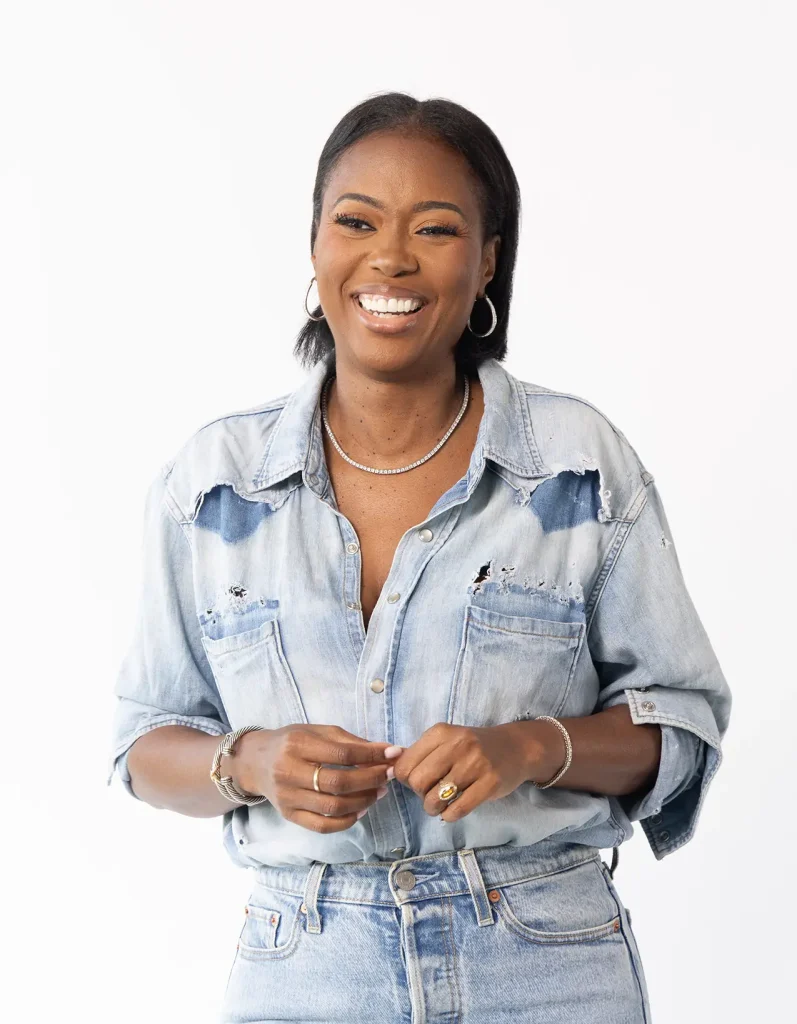
NLM: How do you manage so many roles and do you still find time for yourself?
I live by two principles: “Work smarter, not harder” and “Work hard, play Hard.” They may sound contradictory, but for me, they’re really about balance, discipline, and being intentional with my time.
I’ve learned that managing multiple roles doesn’t mean I have to do everything myself or be everywhere at once. Working smarter means understanding what actually requires my attention, being strategic about where I spend my energy, leveraging relationships and resources, and recognizing that being busy and being productive are not the same thing. I’m very results-oriented. I want to know: What are we trying to accomplish, and what is the most effective way to get there?
At the same time, I absolutely believe in working hard. I’ve built my career by showing up, being prepared, nurturing relationships, and being willing to put in the work when it matters. But I don’t believe success should require sacrificing your entire life. That’s where “work hard, play harder” comes in. I love experiences, travel, spending time with family and friends, enjoying a great dinner, and simply having moments where I can disconnect and enjoy the life I’m working so hard to create.
As I enter this next chapter of entrepreneurship and build MARCH Strategies, that balance is becoming even more important. I’m intentionally designing a business and a life where success isn’t measured by how exhausted I am at the end of the day. It’s measured by impact, freedom, fulfillment, and the ability to be present for the people and experiences that matter to me.
Freedom is also a much bigger part of my definition of success today. I want the ability to determine how I spend my time, travel more, be present for my family, and create a life where professional success and personal fulfillment can coexist. I want to work hard because I’m inspired by what I’m building—not because I believe exhaustion is a measure of accomplishment.
NLM: Are there women who have had a lasting impact on you and changed how you think about leadership?
Camille: I think of leaders like Shirley Chisholm, who reminded us that being “unbought and unbossed” is not just a slogan, but a leadership philosophy rooted in integrity and fearlessness. Her example taught me that leadership sometimes means standing alone in conviction long before others are ready to stand with you.
I also think of Indra Nooyi, whose leadership at PepsiCo demonstrated the power of strategic thinking paired with empathy. She showed that strong leadership is not about choosing between performance and people—it is about holding both at the same time, even when it is difficult.
Women like Kamala Harris have also influenced how I view leadership in high-pressure, highly visible spaces. Her journey reflects the importance of persistence, preparation, and the ability to remain steady in environments where scrutiny is constant and expectations are high.
And closer to the everyday lived experience of leadership, I draw inspiration from countless women in public service, business, and community leadership women who may not always be widely recognized but who consistently show up, advocate for others, and create opportunities where none existed before. Their leadership is often quiet, but deeply transformative.
Together, these women have shaped my understanding that leadership is not defined by a title or a moment—it is defined by consistency, courage, and the willingness to keep showing up even when the path is not clear. They have taught me that you do not have to choose between strength and compassion, or between ambition and authenticity. The most effective leaders embody all of it.
I’ve come to see leadership not as a position you hold, but as a responsibility you carry to create space for others to rise.
NLM: What would you tell a young Black or Caribbean-American woman who wants to start her own business?
Camille: I would tell her: do not wait for permission to build the life or the business you envision for yourself.
As a Black woman of Caribbean heritage, I understand that we often come from families and communities where hard work, stability, and sacrifice are deeply ingrained in us. Those values are part of our strength. But entrepreneurship sometimes requires us to challenge the idea that security can only come from a traditional career or a steady paycheck. Sometimes the greater risk is staying somewhere you have outgrown because it feels safe.
I would also tell her to honor her experience. You don’t have to start from scratch just because you’re starting a business. Your career, relationships, community involvement, successes, mistakes, and even the difficult seasons of your life have given you knowledge that has value. Part of my own journey into entrepreneurship has been recognizing that the experience and relationships I’ve built over the years are not separate from my business—they are part of its foundation.
At the same time, I would be transparent with her: courage does not mean the absence of fear. There will be moments when you question yourself. There will be opportunities that don’t materialize, people who don’t see your vision, and seasons when you have to make decisions without knowing exactly how everything will work out. Entrepreneurship will test your confidence in ways that a traditional career may not.
That’s where resilience becomes important. Resilience isn’t simply about pushing through everything. It’s knowing when to persist, when to pivot, when to ask for help, and when to walk away from something that no longer serves the vision you’re building.
I would encourage her to build relationships before she needs them, understand her numbers, know the value of her work, and never be afraid to charge accordingly. Don’t confuse access with acceptance, and don’t shrink yourself just to remain in a room. If you earn your seat at the table, use your voice while you’re there—and when possible, create space for another woman to come behind you.
Most importantly, I would tell her to stay connected to who she is. Our Caribbean heritage carries generations of entrepreneurship, resourcefulness, community, and perseverance. There is tremendous strength in that legacy.
I’m living this advice myself. I’m transitioning from an established career into building MARCH Strategies full-time, and I don’t have every answer about what the next chapter will look like. But I’ve reached a point where I trust what I’ve built, I trust what I’ve learned, and, most importantly, I trust myself.
NLM: What is something you are most proud of in your journey?
One of the things I’m most proud of right now is having the courage and clarity to build something of my own. I’m closing one chapter with gratitude while actively building the next one. For the first time in a long time, I’m not simply thinking about the next position or title. I’m thinking about what I want to build, who I want to serve, and the kind of impact I want my name and my work to represent.
MARCH Strategies is more than a consulting practice for me—it represents the culmination of years of experience in government, advocacy, business, community engagement, and relationship-building.
The win isn’t simply launching a business. It’s reaching a point where I trust what I’ve built in myself enough to bet on it. I’m confident MARCH Strategies will be successful because it is being built on substance—years of experience, a strong network, a reputation for getting things done, and work that solves real problems for businesses and organizations.
Connect with Camille Hastick
Order this Print Edition: Issue #04: Women In Entrepreneurship
(while copies last)