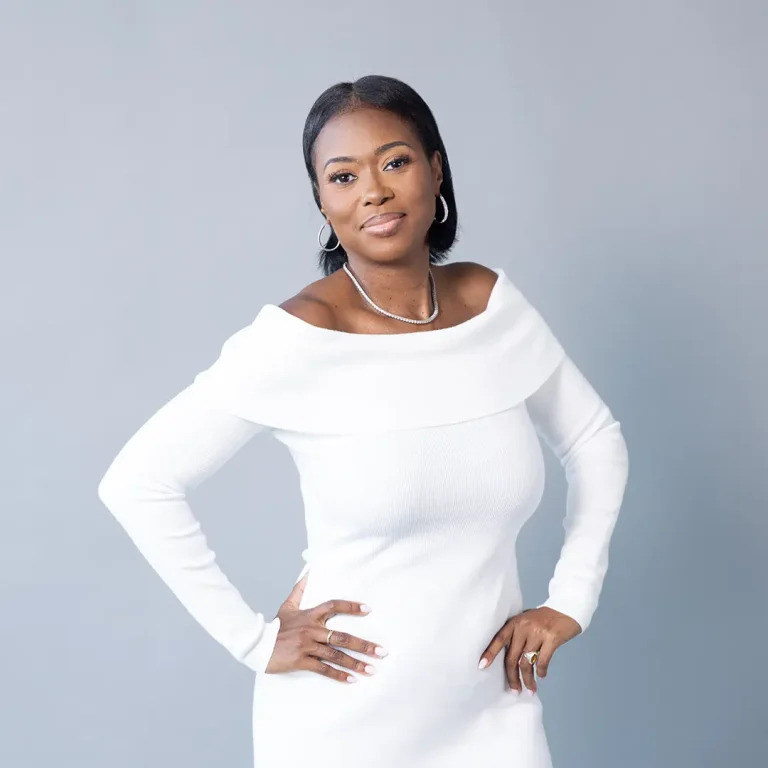
People First, Procedure Second
Jacqueline Bonaparte has a significant question she asks in every first meeting with a new client: “If I could make one miracle happen for you in your work, what would it be?”
“The answer tells me everything I need to know,” she says, “and that miracle becomes my mission.”
As founder of Bonaparte Consulting LLC, based in New York City and now serving clients remotely across a wider footprint, Jacqueline provides back-office support and business strategy to small businesses and nonprofits. The kind of behind-the-scenes infrastructure that keeps passion projects from collapsing under their own weight. She describes her work as less about spreadsheets and more about people.
Advertisements
Order the Print Edition: Issue #04: Women In Entrepreneurship (while copies last)
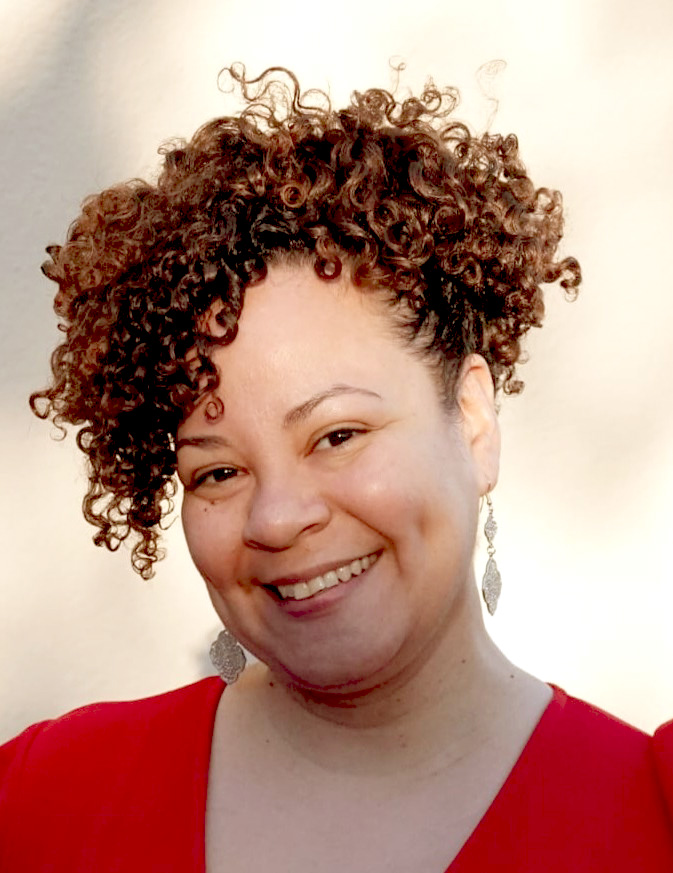
Jacqueline grew up in East New York, the eldest of three, which in her eyes means she came out of the womb already trying to organize everyone and make sure things ran smoothly. Her parents, now both retired, modeled a kind of relentless work ethic she still measures herself against: her mother worked full time and went back to school while still making their house feel like home; her father did back-breaking labor every day and never missed a pickup or a dinner.
“I watched both of them work really hard and thought: that is what it looks like to be all in,” she says.
That upbringing shaped who she serves today. “My clients are almost always small business owners and nonprofit leaders who are pouring everything into something they believe in but do not yet have the infrastructure to sustain it,” she explains.
“I know what it looks like to build something with limited resources and sheer determination. I have a lot of respect for that.”
Long before Bonaparte Consulting existed, Jacqueline ran a cake business in her twenties, one she loved, until a Groupon promotion brought in more volume than her infrastructure could handle. Quality slipped, the joy drained out, and the business she’d started out of love stopped feeling like love at all.
Advertisements
“I lost my passion for baking because I had outrun my own infrastructure,” she says. “That experience never left me.”
From there, she moved into HR, where a boss changed how she saw what was possible. Jacqueline watched her negotiate against a Fortune 500 company, refuse unfavorable terms, and walk away without hesitation when the deal didn’t align with her values. “She operated from morals and principles, not from paper chasing,” Jacqueline says. “I absorbed all of that.”
When that company underwent a restructuring, Jacqueline faced a choice: find another job, or finally bet on herself. She chose herself, and she knew exactly what she wanted to build: support for the business owner she used to be. “The one with the passion and the drive, but not yet the infrastructure to sustain it.”
“Growing up Puerto Rican in East New York, I learned early that you figure things out with what you have,” she says. “You do not wait for perfect conditions. You improvise, you adapt, and you lean on the people around you.”
Being a woman of color in corporate spaces also shaped Jacqueline in the ways she consults. “I spent years in rooms where I had to work twice as hard to be heard, to be taken seriously, to be seen as the expert I was.” This experience sharpened that instinct into something she now leads with: listening. “I have come to believe that most business owners already have the answers. They just need someone to help them frame it, pull it out, and put it together. Less fixer, more coach. Less expert talking at you, more thought partner working alongside you.” she says.
Even her creative life echoes the philosophy. As a fluid artist, Jacqueline sets the conditions and lets go; she can’t control exactly where the paint moves, only the environment that lets something beautiful happen. “I think about
systems the same way,” she says. “People first, procedure second, systems third. That is not just a philosophy, it is how I am wired.”
What sets her approach apart is that she and her small team of independent contractors don’t advise from a distance. They roll up their sleeves alongside business owners.
“My ultimate goal? For them not to need me anymore,” she says. “I want to leave them standing on their own, running their operation with confidence, and wondering why they ever thought this was so hard.”
She recently hit a milestone that made that vision tangible: an engagement where she wasn’t the one doing the day-to-day work at all. Instead, she assessed the client’s needs, brought in the right contractor for the job, and focused on coaching and stabilizing the handoff. “The work was happening, the client was being served well, and my business was generating income that was not tied to my own hours,” she says. “It is proof that the model works.”
Advertisements
Jacqueline is candid about something most people wouldn’t guess from the outside: “I am not as confident as I look. I question myself constantly.” But she’s made peace with what that means. “Almost everything I have done that has mattered has been done in spite of that voice, not because it went quiet,” she says. “Courage is not the absence of doubt. It is the decision to move anyway.”
This belief shapes how she works with clients who are scared and unsure. “I recognize that I am that person too,” she says. “My lack of confidence taught me to listen more carefully, to never assume I have all the answers, and to approach every client with genuine humility.”
Her advice for other women eyeing entrepreneurship is simply: “Do it. Whatever version of ‘it’ looks like for you, do it. Waiting for perfect conditions is just fear in a business suit.”
From there, the nuance sets in. Passion is not a business plan. Know your gaps before growth exposes them. Get clear on your values before you get busy, and let that clarity filter which opportunities you say yes to. And release the idea that you’re supposed to know everything.
“The business owners I admire most are the ones who know what they do not know, and are humble enough to ask for help.”
Above all: don’t go it alone. “So many women I talk to are carrying everything themselves because they believe no one else will care about their business the way they do,” she says. “But that belief will keep you stuck and burned out. The right people will care. Find them, trust them, and let them help you grow.”
When asked about making an impact, Jacqueline highlights her work with women. Watching a woman step into ownership of something truly hers is one of the most invigorating things she gets to witness. There are the nonprofits she supports too, whose stabilized operations ripple out into the communities and families they serve. And then there’s the personal piece: her nieces and goddaughter, watching.
“I want them to grow up seeing women of color in business as normal, not exceptional, not rare, but expected,” she says.
Advertisements
“I want them to have examples to point to, women they know personally who look like them and have the same experiences as them, who built something and stood in it with confidence.”
Jacqueline doesn’t point to a single source of inspiration. She pulls from everywhere: the former boss who modeled integrity under pressure, her husband, her constant, who cheers her on through the days she wants to quit, and the women around her, endlessly, quietly bossing up.
“Every time I see a woman step into her purpose, whether she is a client of mine, a friend, or family member, I feel it,” she says. “We are better when we are all rising together.”
Her mother’s words still guide her most days: Where there is a will, there is a way.
Order the Print Edition: Issue #04: Women In Entrepreneurship (while copies last)