The Long Table of Experience: Chef Herb Wilson
Few chefs carry a résumé that reads like a map of the culinary world, but Chef Herb Wilson spent decades building exactly that.

Click to View the Digital Magazine Version or continue reading:
NLM-Issue-03-food
From Michelin-starred kitchens in France to some of New York City’s most respected dining rooms, Chef Herb Wilson has spent more than three decades building a career that spans across some of the most respected kitchens in the culinary world.
Over the years, Wilson has appeared more than forty times on Food Network and programs including Top Chef Masters, Beat Bobby Flay, and MasterChef as a guest judge. But beyond television, his reputation was built inside kitchens where consistency, endurance, and execution matter more than celebrity.
Advertisements
Wilson trained internationally through stages in Paris and Roanne, earning experience at
Michelin-recognized restaurants including Gerard Pangaud and Les Frères Troisgros. His work also earned two-star recognition from The New York Times on three separate occasions. Throughout his career, he has worked alongside respected culinary figures including Marcus Samuelsson and Charlie Trotter while continuing to mentor the next generation of chefs. He also serves on the inaugural James Beard Foundation Culinary Advisory Board and the Executive Board of the Chef’s De Cuisine Association of America.
Now back in his hometown of New York City, Wilson continues his journey at The Hunt & Fish Club on West 44th Street. In conversation with Next Layers Magazine, he speaks candidly about mentorship, food culture, the realities of restaurant life, and what it truly takes to survive in one of the toughest industries in the world.
An Interview with Chef Herb Wilson
While in Houston on business, we caught up with Chef Wilson over the phone to gain more insight.
NLM: So, Chef, you’ve spent 30 years in kitchens across the world. What first pulled you into this life and what keeps you in it?
Chef Herb Wilson: Ha! Yeah, once you get pulled into this life, you can’t get out of it.
NLM: Ha, almost like a black hole, huh?
Chef Herb Wilson: Well, not necessarily a black hole. It’s just addictive once you start. All I ever wanted to be was a chef. Since I was 13 years old, I’d be in the kitchen, while both my parents were at work, trying to cook something for me and my brother. I’m sitting there making hot dogs and beans, maybe adding a little maple syrup, thinking I’m a genius like, “Oh, this is brilliant.”
Then, there are people along the way that say, “Oh, you can’t do this, you can’t do this. You can’t even lift up the pots and pans.” Because at that time I was very thin. But, you know, it’s just what I love to do.
Advertisements
And being a chef isn’t just cooking anymore – you’re running the business. That’s not why I got into this, it was the glamorous side of “Ooh, we’re going to cook something, and we’re going to make something beautiful and put it on a plate.”
But, when you’re running in a kitchen, they want you in charge of labor costs, food costs, and all these financial parameters to meet. You can also be in charge of scheduling, payroll and all sorts of other aspects of the job.
The idea of someone going to cooking school or sees someone on TV and says “ Oh I want to be an exec chef” – That’s just not realistic.
NLM: What did working in European kitchens teach you, that you didn’t see as much on the American side?
Chef Herb Wilson: Well, when I was 21 years old, I had a dream to go to France, and then three of my grandparents died, so I’m like: “Live your dreams.”
I took all the money I’d saved up and just went to work in France for free. One of the first jobs I got came from taking the Michelin guide and then writing 50 letters to 50 restaurants at two and three stars – I got back two replies.
What France taught me was respect for the ingredients. The fish, produce, vegetables, meat, the way it was cared for, the way it was delivered, the way it was packaged was incredible. This was all pre food revolution in the United States.
When I started out, you couldn’t go into a supermarket or Whole Foods in the U.S. and find 12 different types of herbs. You just had basil.
You couldn’t even find things like balsamic vinegar or extra virgin olive oil or mesclun lettuce – Which wasn’t that long ago.
Advertisements
I’ll tell you when I first got to France, one of my first jobs asked me to open cases of Sea Urchin and I had never seen one in my life. But, that restaurant had a dish with scrambled eggs and Uni, so, I had to open the whole case, then peel potatoes, and I had already been a chef. These days you just buy uni. Nobody opens that stuff from scratch anymore. It’s just nonexistent. So, just realizing the road felt endless, but hard work pays off.
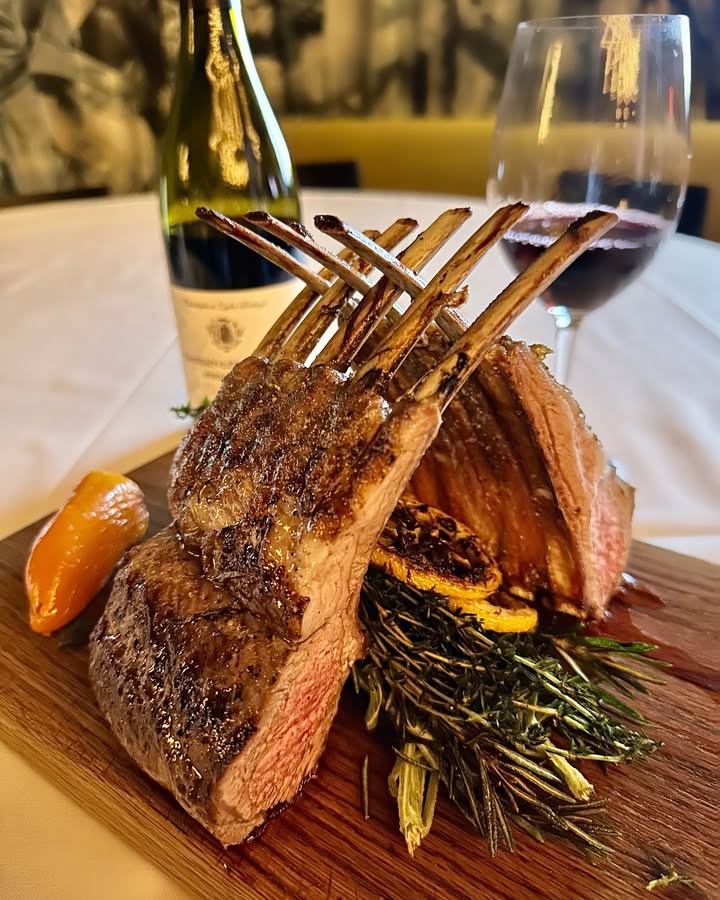
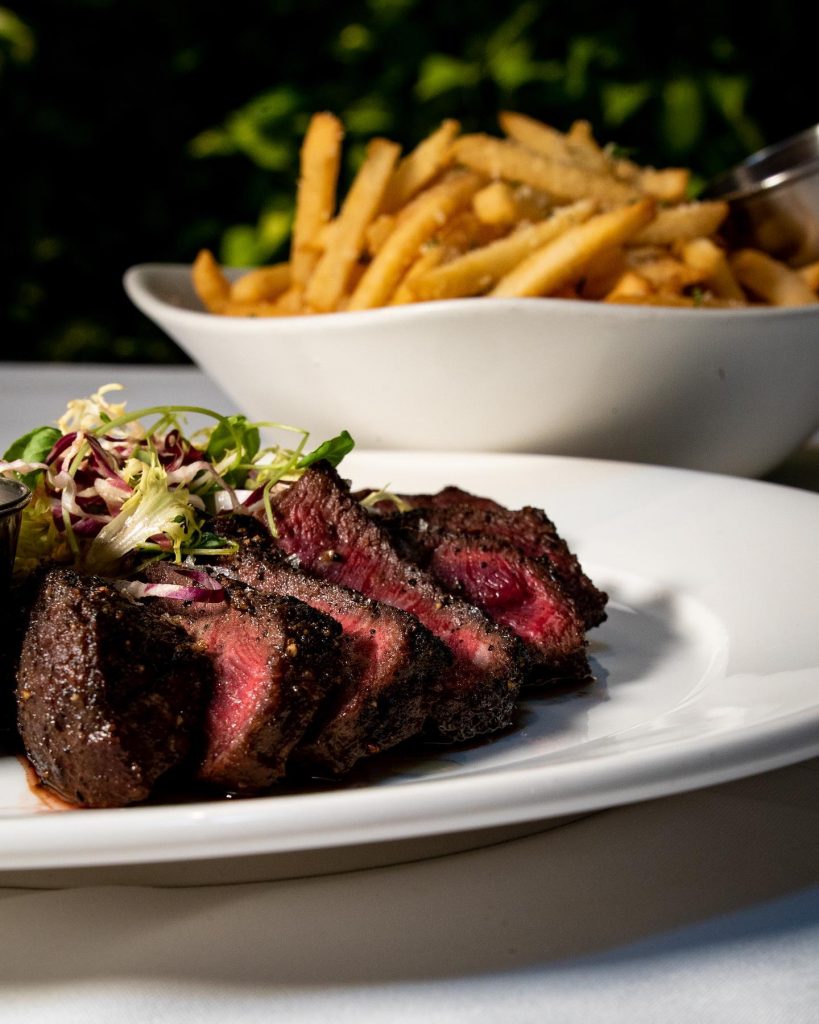
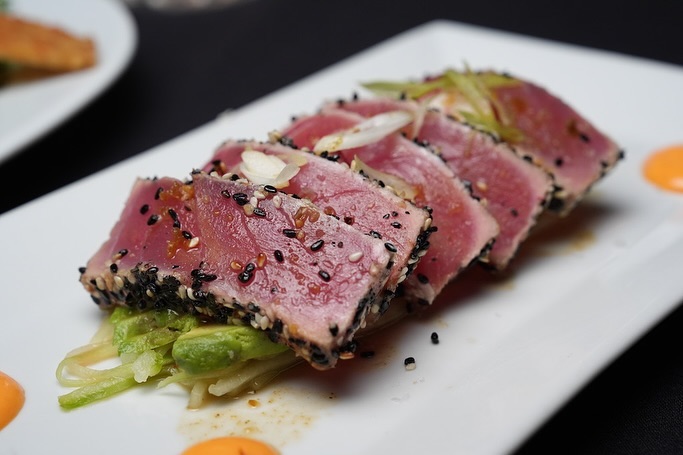
NLM: You’ve appeared over 40 times on Food Network and shows like Top Chef Masters, how does being on camera compare to being in the kitchen?
Chef Herb Wilson: Being on TV and Top Chef was fun. It wasn’t long enough. I was supposed to go back. That didn’t happen. But at the end of the day, you’ve got to get back to your real job.
NLM: Do you feel that the media exposure and TV helps or does it distract from the craft of being a chef today?
Chef Herb Wilson: It definitely helps. I find a lot of new chefs have become celebrities, and that’s all well and good. They’ll have two, three restaurants and win some awards and be celebrated. I’m all for that, but, there are guys that haven’t paid their dues in this business. I don’t have any trouble with anyone’s celebrity – in fact, two of my best friends are celebrity chefs. However, there are others in this business that just haven’t gone through the loops, you know?
When you do this whole television thing, eventually, you’re gonna have to back it up. After you’re on TV, the next thing you’ll do is write a book, then write down and give up your recipes. After all that you still have to go back to your kitchen and run it, ya know? It’s wacky, but I’m happy to see young chefs taking an interest in what the culinary arts are about, but also realizing it’s a tough industry.
NLM: What are some of the hardest realities about the food and beverage industry that people on the outside don’t fully see?
Chef Herb Wilson: I think across New York and all of major cities, restaurants are having problems – for many reasons.
- It’s hard to find staff.
- People aren’t going out as much as they used to – they just don’t have the disposable income.
- In the past five to ten years, there’s so many new food allergies.
- The cost of goods is just insane.
- There is an over-saturation in restaurants across the country.
- Great food is more accessible. I was in wine country three weeks ago, and was able to purchase great wine at a gas station. If you go out to most baseball stadiums you’re gonna get great food in that radius as well.
The thing that really kills restaurants however are the cost of goods, and labor. If I hire a cook to work for me, they’ll just go across the street and make $2 more now. So, when you walk into most restaurants, whether fine dining or just basic contemporary American, Italian restaurants or Asian restaurants, people wonder: Why am I paying $40 for a plate of chicken or $50 for a plate of pasta? It’s insane.
NLM: Do you think there is a responsibility that seasoned chefs like yourself should provide for the next generation?
Chef Herb Wilson: Hell, yeah. I mean, it’s one of the greatest joys of my life to mentor someone and help them better themselves or give advice. I’ve mentored countless people over the years including some
big names.
The question becomes “What have you done in your life?” If you haven’t helped anybody in continuation of the craft and can’t pay it forward, then what difference does it make? Whether helping someone find a job, writing a reference, or giving someone business advice, there’s so many ways to help others.
Advertisements
NLM: Are there still challenges that you’re facing in the industry?
Chef Herb Wilson:Well, I’ll just say this. I was at a party at a restaurant with my good friend Marcus Samuelsson. I’m talking to someone who introduces me to the chef and he says “Oh, this is Herb Wilson. He was a black chef, long before there were black chefs.” And I was like… that pretty much sums it up.
When people are looking to build these major restaurants in Manhattan, these three to five billion dollar projects, African Americans don’t sit on the tip of their tongue, unfortunately. It’s almost like golf caddy’s. Years ago, all the caddies were black, right? And now that the money became bigger, the purses became bigger, the caddies aren’t black anymore. You very rarely see a black caddy on the tour with a high end golfer. I think it’s very similar with chefs.
But I think the proliferation of young black chefs coming up is very good and exciting to see. I actually met a chef and wanted to introduce myself and shake hands, and she’s said, “Yeah, I know who you are. You paved the way for a lot of us.” And I kind of did because when I was coming up, there wasn’t many black chefs or people of color in this industry.
So, even with the challenges, I’m just happy to see people of color are doing elevated Caribbean and Southern food. I’m also happy to see more female chefs here. Because when I was coming up, women always got relegated to the pastry kitchen.
NLM: With that said, what advice would you give young chefs who want to pursue a career in the food and beverage industry?
Chef Herb Wilson: Good training. Work with good chefs, and don’t limit what you can do. Eventually you’ll have your own vision. And for God’s sake, pay your dues because in this industry, it just doesn’t happen overnight.
NLM: What do you love the most about food?
Chef Herb Wilson: When I first got into this, my mentor was the great Patrick Clark. We would read magazines and cookbooks. For me, it was the visuals of food, flavors, tastes, and plating. It can be very artful. I’m constantly snapping pictures and putting them in my file – both my own and other people’s food. But now, I’ve graduated into this thing where people expect me to not only produce beauty on the plate, but to create a culture in the kitchen. That old thing about yelling and screaming – that, doesn’t work anymore. Especially, now.
A famous chef, Jean George once told me, “Great food is 65% product, 35% technique.” So, if I give you a chicken breast and I have a chicken breast, well, obviously, I’m gonna produce a better chicken breast because I may have a better technique than you do.
But, what do I love most? I love Asian food. That’s my go-to. I love Japanese food. My grandmother was half Chinese from Jamaica so, yeah, I obviously love Chinese food. I love French food. I love elevating Haitian food. And, you know, lately, we’re seeing the proliferation of elevated Indian restaurants in this country, especially in New York. Also, I have a friend, Simon Kim, who is just red hot right now. He has a restaurant called COQODAQ. They make an amazing Korean fried chicken with caviar on top.
Advertisements
NLM: Wow, that’s elevated. So, what brings you back to New York City?
Chef Herb Wilson: Well, I came back to New York for a great opportunity. But, honestly, I think New York City has become pretty prohibitive. For example, I’m living in Mt. Vernon and I commute into the city, so I have to pay the monthly commuter pass. And now, I have a car that I keep in a garage that I very rarely use.
I think the Food Revolution is here to stay in New York. But, I am seeing less people enjoying dining out and maybe wanting to stay home and cook.
Yet, you have the Hampton season coming up and a lot of people bring their own personal chefs out. So I think a lot of that’s changed in New York. Plus, people have very high standards right now.
NLM: What is something you would tell your younger self?
Chef Herb Wilson: Well, that’s one thing I’ll say about working in kitchens. The first thing I say when I see a young cook is dude, go get some good shoes that will give you support, whether they be Crocs, Birkenstocks, or whatever because your knees and your back are the first things that are gonna go.
You know, In 2015, I had sciatica, and it just disables you. I also had to have a whole knee replacement and it was just hard to consistently go from sitting to standing or up and down steps or whatever. So, yeah, take care of your body, because you’re standing on your feet all day and this industry is not easy.